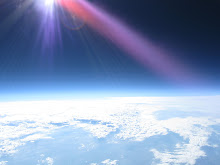
Earlier this week, a question was asked through the wonderful tool of Facebook message. So Patricia asks:
I know you just posted an answer post, so maybe this can be for next week or something, but I was wondering what you miss most about Earth. I mean, besides the obvious, like your parents. And normalcy.
Thanks for sharing your story with us - I love reading it!
I've taken a while to respond to this because mainly I needed to think about it for a bit. I miss a lot of things about Earth. I miss mainly cultural things, like books, movies, and styles. I would have loved to have seen the sixth Harry Potter movie this summer. As it is, I have to wait until it makes it online somewhere. I miss my favorite books. I miss my favorite music. I miss my stuffed animals - yes stuffed animals, I have no shame. I miss my favorite t-shirts and jeans. The universe is a strange place. It's, well, alien. I feel so isolated and alien.
What do I miss the most besides Ellen and Scott? I have John, so I can't miss him. This might sound strange but I miss normalcy. I miss feeling normal. I miss not feeling like a strange alien, a backwoods alien that people find amusing.
I want to be normal again. I want to be average. I'm tired of being a spectacle. I'm tired of being strange. I want to be a normal teenager. I want to have a normal life. But that's gone now, and I must take life as it is. I have John and that is what matters the most.
But I still wish I could have seen Harry Potter and the Half-Blood Prince.
Showing posts with label Earth. Show all posts
Showing posts with label Earth. Show all posts
Monday, August 24, 2009

Friday, July 10, 2009
Entry 20
It’s been months since that fateful day when I was abducted by the Society of Anthropologists. In that time I have seen many things I could never have imagined or dreamed. I have seen nebulas more beautiful than anything Earth contains. I have seen jewels so rare that I could purchase Earth with them. I have met aliens so exotic that I still have trouble believing I have actually met them. Ven was right that once I knew the universe I could never be contained by Earth again, but he was wrong to think I will ever consider myself “Earth liberated”. Despite its faults and ugly parts, Earth is my home. It always will be. I will always long to be back on Earth. I will always wish I could visit and see the blue sky one more time. I will always want to be home. Ven can never understand that, because he has never been to Earth.
“Have you ever even been to Earth?” I demanded, very much distracted from my surroundings by this topic of conversation.
“No, that would be contaminating Earth’s culture, wouldn’t it?” Ven responded. “My great-grandmother is the most recent Earthling we’ve had. From her stories, I don’t ever imagine I would want to visit.”
“Well, World War II was a horrible time,” I agreed, “but things have changed.”
“Really?” he asked. “Seems to me that Earth is filled with wars: World War II, World War I, the Franco-Prussian War, the American Civil War, and more I don’t even know about. The human colony is much more peaceful.”
“How is it you know so much about the wars of Earth?” I demanded. It seemed to me that a man who had never set foot in Earth should not know half as much.
“Most of the time humans are liberated because of wars,” he answered. “The Society of Anthropologists doesn’t like taking specimens out of the native environment. They prefer to remove the androids once their owners have died after long natural lives. However, in wars the androids are often drafted, the androids get injured, and the human has to be removed because of the cultural contamination laws. You are the first human in hundreds of years not to be removed because of a war.” He paused. “Why were you removed?”
“Not in a war,” I snapped, not pointing out that I was removed because of another act of violence. It seemed to me that having people only come out during wars had created a very skewed view of Earth to the humans who had never been there.
“Well it must have been something that compromised your android,” he said. “Androids are programmed not to let themselves get injured, and they’re made more durable than organics like us. It takes a lot to hurt one.” His words made sense. I had seen John take hits in football that would have seriously injured any normal human. However, John had always laughed them off, picking himself up as if it had simply been a tap. John was certainly more durable than I was.
“Earth is a wonderful place,” I responded, not wanting to talk about John getting shot. “You shouldn’t judge a place you have never visited.”
“When people tell me that a planet is full of voracious carnivorous plants I think I have the right to judge whether or not I think it’s a place I should like to visit,” Ven said with a shrug. “There is a directory terminal up here on the left.” He veered off from our straight path, weaving amongst the aliens to the wall. I followed close behind him, not wanting to be trampled or get separated from the one ally I had.
Ven stopped in front of the wall much to my confusion. The walls were smooth and white, reaching over twenty feet up before curving into an arched ceiling. I could see nothing different about this stretch of wall than any other part of the wall other than there was a raised square about the size of the palm of my hand. Surely that small area could not be a directory.
“This is the directory?” I asked, my voice laced with impatience and annoyance. Ven shot me a silencing look and then touched the palm sized square.
Suddenly the portion of the wall eye level with us shimmered and turned black. An image appeared that looked like a floor plan with a lime green dot marking one section.
“That’s us,” Ven said, pointing to the lime green dot. “This shade of green is the universal color of importance, something that deserves attention. It’s often used on warning signs, so you should be aware.” I stared at Ven incredulously.
“Lime green is the warning color?” I asked. “Not red?” He frowned but did not glance my way.
“Why would red be a warning color?” he responded. “Seems odd you would use such a comforting color associated with newborns in many cultures to signify danger.” He shook his head, as if completely baffled by my words.
Red was a comforting color? Could Earth be such a completely opposite place from the rest of the universe? It made no sense. However, I did not want to make sense out of it. I only wanted to find my brother. So I did not argue with Ven. Instead I waited patiently for him to discover where they were holding John.
“Have you ever even been to Earth?” I demanded, very much distracted from my surroundings by this topic of conversation.
“No, that would be contaminating Earth’s culture, wouldn’t it?” Ven responded. “My great-grandmother is the most recent Earthling we’ve had. From her stories, I don’t ever imagine I would want to visit.”
“Well, World War II was a horrible time,” I agreed, “but things have changed.”
“Really?” he asked. “Seems to me that Earth is filled with wars: World War II, World War I, the Franco-Prussian War, the American Civil War, and more I don’t even know about. The human colony is much more peaceful.”
“How is it you know so much about the wars of Earth?” I demanded. It seemed to me that a man who had never set foot in Earth should not know half as much.
“Most of the time humans are liberated because of wars,” he answered. “The Society of Anthropologists doesn’t like taking specimens out of the native environment. They prefer to remove the androids once their owners have died after long natural lives. However, in wars the androids are often drafted, the androids get injured, and the human has to be removed because of the cultural contamination laws. You are the first human in hundreds of years not to be removed because of a war.” He paused. “Why were you removed?”
“Not in a war,” I snapped, not pointing out that I was removed because of another act of violence. It seemed to me that having people only come out during wars had created a very skewed view of Earth to the humans who had never been there.
“Well it must have been something that compromised your android,” he said. “Androids are programmed not to let themselves get injured, and they’re made more durable than organics like us. It takes a lot to hurt one.” His words made sense. I had seen John take hits in football that would have seriously injured any normal human. However, John had always laughed them off, picking himself up as if it had simply been a tap. John was certainly more durable than I was.
“Earth is a wonderful place,” I responded, not wanting to talk about John getting shot. “You shouldn’t judge a place you have never visited.”
“When people tell me that a planet is full of voracious carnivorous plants I think I have the right to judge whether or not I think it’s a place I should like to visit,” Ven said with a shrug. “There is a directory terminal up here on the left.” He veered off from our straight path, weaving amongst the aliens to the wall. I followed close behind him, not wanting to be trampled or get separated from the one ally I had.
Ven stopped in front of the wall much to my confusion. The walls were smooth and white, reaching over twenty feet up before curving into an arched ceiling. I could see nothing different about this stretch of wall than any other part of the wall other than there was a raised square about the size of the palm of my hand. Surely that small area could not be a directory.
“This is the directory?” I asked, my voice laced with impatience and annoyance. Ven shot me a silencing look and then touched the palm sized square.
Suddenly the portion of the wall eye level with us shimmered and turned black. An image appeared that looked like a floor plan with a lime green dot marking one section.
“That’s us,” Ven said, pointing to the lime green dot. “This shade of green is the universal color of importance, something that deserves attention. It’s often used on warning signs, so you should be aware.” I stared at Ven incredulously.
“Lime green is the warning color?” I asked. “Not red?” He frowned but did not glance my way.
“Why would red be a warning color?” he responded. “Seems odd you would use such a comforting color associated with newborns in many cultures to signify danger.” He shook his head, as if completely baffled by my words.
Red was a comforting color? Could Earth be such a completely opposite place from the rest of the universe? It made no sense. However, I did not want to make sense out of it. I only wanted to find my brother. So I did not argue with Ven. Instead I waited patiently for him to discover where they were holding John.
Thursday, July 9, 2009
Entry 19
Ven directed me through the maze of ductwork. Eventually we came to a vent that he skillfully opened, and we slipped into an empty room. It looked like a conference room, with a large round table and many chairs of different varieties. If saving John had not been so important to me, I could have spent forever studying all the different chairs. Some were short, practically on the ground. Others had holes in the back of them that could have been for tails. Some were more of stools than chairs, and still others had layers of arm rests as is for aliens with multiple arms. It was as if a chair designer had gone insane.
“How do we know where to find John?” I asked Ven, tearing my attention away from the chairs.
“There should be a directory somewhere around here,” Ven answered. “Anthropologists aren’t exactly a secretive bunch. Most of the time they like to boast about their accomplishments, thinking their area of study is better than their colleagues. If we can’t find your android in the directory, we should be able to ask.”
“Ask?” I repeated. It could not be so easy. I thought breaking my brother out would be much more difficult. I had expected it would take the skills of James Bond. Simply asking seemed far too simple and too easy.
“This isn’t a high security place, Carlee,” Ven said. “Anthropologists aren’t that worried about people breaking in to steal their books and artifacts.” He paused. “Though of course the more valuable artifacts are kept in a more secure location. Your android just isn’t considered that valuable.”
“He’s valuable to me,” I responded. Ven simply leveled me with a much too patient look.
“Follow me, Carlee,” he said. “We will find your android.”
Ven walked out of the conference room without so much as scoping out the hall first. He held his head high with confidence, as if he belonged. I darted out of the room not quite as at ease.
Aliens strolled through the halls. Aliens that towered ten or eleven feet high sauntered by me. Aliens that were barely bigger than mice raced past. Some aliens were rounder than they were tall. Other aliens were skinny like sticks. Some aliens were furry, other scaly, and still others had feathers. I saw colors I had never imagined, and my ears ached from frequencies it could barely hear. I felt quite small and insignificant as I followed Ven through the halls of the headquarters of the Society of Anthropologists. It took all of my self control not to grab his hand in fear. Ven was not my brother, and I would not seek comfort from him.
“So how does being a third generation non-Earthling work?” I asked, trying to distract myself from the sights and sounds that were assaulting me.
“We count from our most recent Earth direct ancestor,” he answered, not at all phased by the aliens strolling about us. “On my mom’s side my family has been non-Earth for many more generations. But my dad’s grandmother, my great grandmother, left Earth in what you would consider the 1940s.”
“How does a person just leave Earth?” I asked. I was not the brightest student, but even I knew Earth had not had space access until the Cold War and the Space Race.
“Same way you did,” Ven said. “There was a contamination issue. In my great grandmother’s case, she became a nurse in World War II and her android was an officer in the military. The android was shot. The Society of Anthropologists could not let Earth discover android technology so they pulled the android out of the war. They could not pull the android out without taking my grandmother as well. So she became an Earth liberated human, like you.”
“Earth liberated,” I repeated. “You make it sound as if living on Earth is living in bondage.”
“In many ways it is,” he answered. “Once you know the universe, Carlee, you’ll never want to go back. You have been freed from the confines of Earth. You have been liberated.”
“How do we know where to find John?” I asked Ven, tearing my attention away from the chairs.
“There should be a directory somewhere around here,” Ven answered. “Anthropologists aren’t exactly a secretive bunch. Most of the time they like to boast about their accomplishments, thinking their area of study is better than their colleagues. If we can’t find your android in the directory, we should be able to ask.”
“Ask?” I repeated. It could not be so easy. I thought breaking my brother out would be much more difficult. I had expected it would take the skills of James Bond. Simply asking seemed far too simple and too easy.
“This isn’t a high security place, Carlee,” Ven said. “Anthropologists aren’t that worried about people breaking in to steal their books and artifacts.” He paused. “Though of course the more valuable artifacts are kept in a more secure location. Your android just isn’t considered that valuable.”
“He’s valuable to me,” I responded. Ven simply leveled me with a much too patient look.
“Follow me, Carlee,” he said. “We will find your android.”
Ven walked out of the conference room without so much as scoping out the hall first. He held his head high with confidence, as if he belonged. I darted out of the room not quite as at ease.
Aliens strolled through the halls. Aliens that towered ten or eleven feet high sauntered by me. Aliens that were barely bigger than mice raced past. Some aliens were rounder than they were tall. Other aliens were skinny like sticks. Some aliens were furry, other scaly, and still others had feathers. I saw colors I had never imagined, and my ears ached from frequencies it could barely hear. I felt quite small and insignificant as I followed Ven through the halls of the headquarters of the Society of Anthropologists. It took all of my self control not to grab his hand in fear. Ven was not my brother, and I would not seek comfort from him.
“So how does being a third generation non-Earthling work?” I asked, trying to distract myself from the sights and sounds that were assaulting me.
“We count from our most recent Earth direct ancestor,” he answered, not at all phased by the aliens strolling about us. “On my mom’s side my family has been non-Earth for many more generations. But my dad’s grandmother, my great grandmother, left Earth in what you would consider the 1940s.”
“How does a person just leave Earth?” I asked. I was not the brightest student, but even I knew Earth had not had space access until the Cold War and the Space Race.
“Same way you did,” Ven said. “There was a contamination issue. In my great grandmother’s case, she became a nurse in World War II and her android was an officer in the military. The android was shot. The Society of Anthropologists could not let Earth discover android technology so they pulled the android out of the war. They could not pull the android out without taking my grandmother as well. So she became an Earth liberated human, like you.”
“Earth liberated,” I repeated. “You make it sound as if living on Earth is living in bondage.”
“In many ways it is,” he answered. “Once you know the universe, Carlee, you’ll never want to go back. You have been freed from the confines of Earth. You have been liberated.”
Subscribe to:
Posts (Atom)